Ida Friederike Görres (1901–1971) was a prominent Catholic writer in German-speaking Europe. In his eulogy for her, Fr. Joseph Ratzinger praised how Görres “spoke with an insightful certainty and a fearlessness about the pressing questions and tasks of the Church today.” In 2025, Bishop Erik Varden called her “a crucial voice for the present moment.”
One of the themes of Görres’ non-fiction was the nature of marriage. Her book What Binds Marriage Forever, first published in 1971, is a startlingly relevant and engaging defense of indissolubility in the face of its detractors.
On April 22, Humanum Review hosted a lecture by Jennifer Bryson, who is bringing the work of Görres to an English-speaking audience for the first time. Dr. Bryson’s presentation was followed by a response from Dr. Jonathan Bieler and a conversation moderated by Dr. Nicholas Healy. We invite our readers to view the recording of the presentation:
Dr. Jennifer Bryson is a Fellow in Catholic Studies at the Ethics and Public Policy Center. She is also the English-language translator of the works of Ida Friederike Görres, including the recently released What Binds Marriage Forever.
Nicholas J. Healy is Assistant Professor of Philosophy and Culture at the John Paul II Institute for Studies on Marriage and Family in Washington, DC, an editor of the North American edition of Communio: International Catholic Review, and author of The Eschatology of Hans Urs von Balthasar: Being as Communion (Oxford University Press).
Jonathan Bieler is Assistant Professor of Patrology and Systematic Theology at the John Paul II Institute in Washington, D.C. He is author of a study on Maximus the Confessor and studies the intersection between Christology and Metaphysics. He lives in Hyattsville, MD, with his wife and four children.
Posted on May 14, 2026
Recommended Reading
What Obergefell Did Not, and Could Not, Do
Jeff Shafer
After the Supreme Court’s ruling in Obergefell v. Hodges that the Fourteenth Amendment requires state civil marriage licensure to include same-sex partners, what remains of the states’ authority and policy options as to the natural family? For instance, may states continue to employ original birth certificates to record a child’s maternal and paternal progenitors—and exclude persons who are neither? May states still apply the historic presumption of paternity only to men reasonably presumed fathers, and not to women who are not and cannot be fathers? May states adjudicate child custody contests with a default rule in favor of fit natural parents, and against genetic strangers?
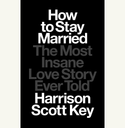
Marriage is an institution battered by twin forces. On the one side are the cynics and the increasing number of people who see no point in it. To be yoked to another person for life seems like an unbearable hell. It is banal and bourgeois. It limits and crushes. The evident pain and tragic betrayals do not seem worth the price of admission. On the other are the idealists, those who sugarcoat and romanticize marriage. These see the marriage bed as heaven on earth and a good marriage as the simple product of piety and hard work. Harrison Scott Key’s How to Stay Married: The Most Insane Love Story Ever Told speaks to these dueling forces.
How to Grow in Love: Through Adolescence to Adulthood
José Granados
I. Introduction: Precocious Adulthood, Prolonged Adolescence
We live in an age of precocious adulthood and prolonged adolescence. The two are paradoxically related, for the person who is allowed…